

SOFTWARE · DATA · ALGORITHMS

Data workflows
for physical AI.

Collect synchronized video and sensor data, extract motion and activity signals, and prepare datasets for robotics and model evaluation.

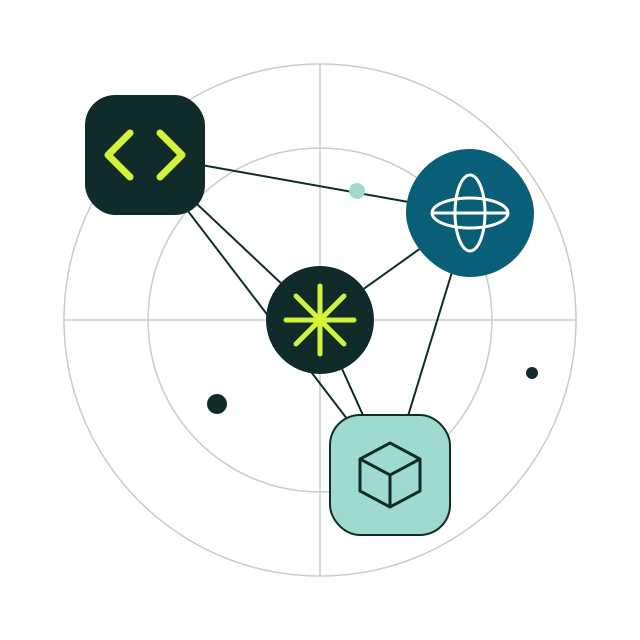
Connected software, data and algorithm modules around a central spark
THE BUILDING BLOCKS

From raw recordings
to useful data.

Start with the part you need: collection tools, a task-specific dataset, processing algorithms or a connected workflow. Define the inputs, outputs and acceptance checks together.

01

Data workflow software

Need
Capture and upload video and sensor streams. Review synchronized playback and sensor plots, annotate activity segments and export selected data.
What to share
Your cameras and sensors, file formats, storage environment and review workflow.
Scope
Capture and upload tools, session review, quality reports and dataset exports.
02

Multimodal datasets

Need
Build egocentric datasets around defined tasks and scenes, with video, motion signals, task labels and documented quality criteria.
What to share
Target tasks, scenes, sensor modalities, annotation needs and permitted data use.
Scope
Dataset specifications, collection protocols, quality filtering, annotation and delivery formats.
03

Perception & annotation

Need
Extract hand keypoints and motion trajectories, segment activities, check recording quality and pre-label clips for human review.
What to share
Representative clips, sensor calibration, target labels and evaluation criteria.
Scope
Keypoint and trajectory outputs, time-coded labels, quality scores and face blurring.
04

Applied AI solutions

Need
Connect capture, processing, review and delivery into a repeatable workflow for a defined robotics or model-development task.
What to share
The target task, available equipment, integration environment and acceptance tests.
Scope
A scoped pilot, connected data pipeline and measured results before wider rollout.

Typical requirements

  • Prepare a multimodal dataset

    Select tasks and sensor streams, check synchronization and completeness, and package accepted recordings with labels and metadata.

  • Turn video into structured signals

    Extract hand keypoints, motion trajectories and activity segments from representative clips, with quality checks and human review.

  • Connect collection to evaluation

    Bring recording, processing and review into one workflow, then test exported data against your model and task criteria.

From recording to reviewed dataset

Illustrative. Processing steps depend on your sensors, task and acceptance criteria.

  1. Capture the data

    Record video and sensor streams with timestamps, device settings and task context.

  2. Process with algorithms

    Check recording quality, extract motion signals and propose time-coded labels.

  3. Fit the data workflow

    Review labels and flagged segments, then package accepted clips for your existing tools.

  4. Evaluate the results

    Check dataset quality and model-task fit against agreed acceptance criteria.

WHAT IF WE STARTED HERE?

What’s on
your mind?

Tell us the task, the recordings or sensors you have today, and the result you need.

Start with a concrete brief. We first check the technical fit, then agree the data requirements, deliverables and acceptance criteria for a scoped pilot.

Available modules, data rights, deployment options and acceptance criteria are confirmed for each project.

This tool prepares an email draft in your browser. No form data is uploaded or saved to a CRM. You review and send the email yourself. Privacy details